
SecondLife is our editorial space where we explore how architecture can give new purpose to shipping containers. From iconic projects around the world to fresh ideas on circular design, we share stories that inspire a more sustainable and elegant future.

Francesca Dipino
Co-Founder
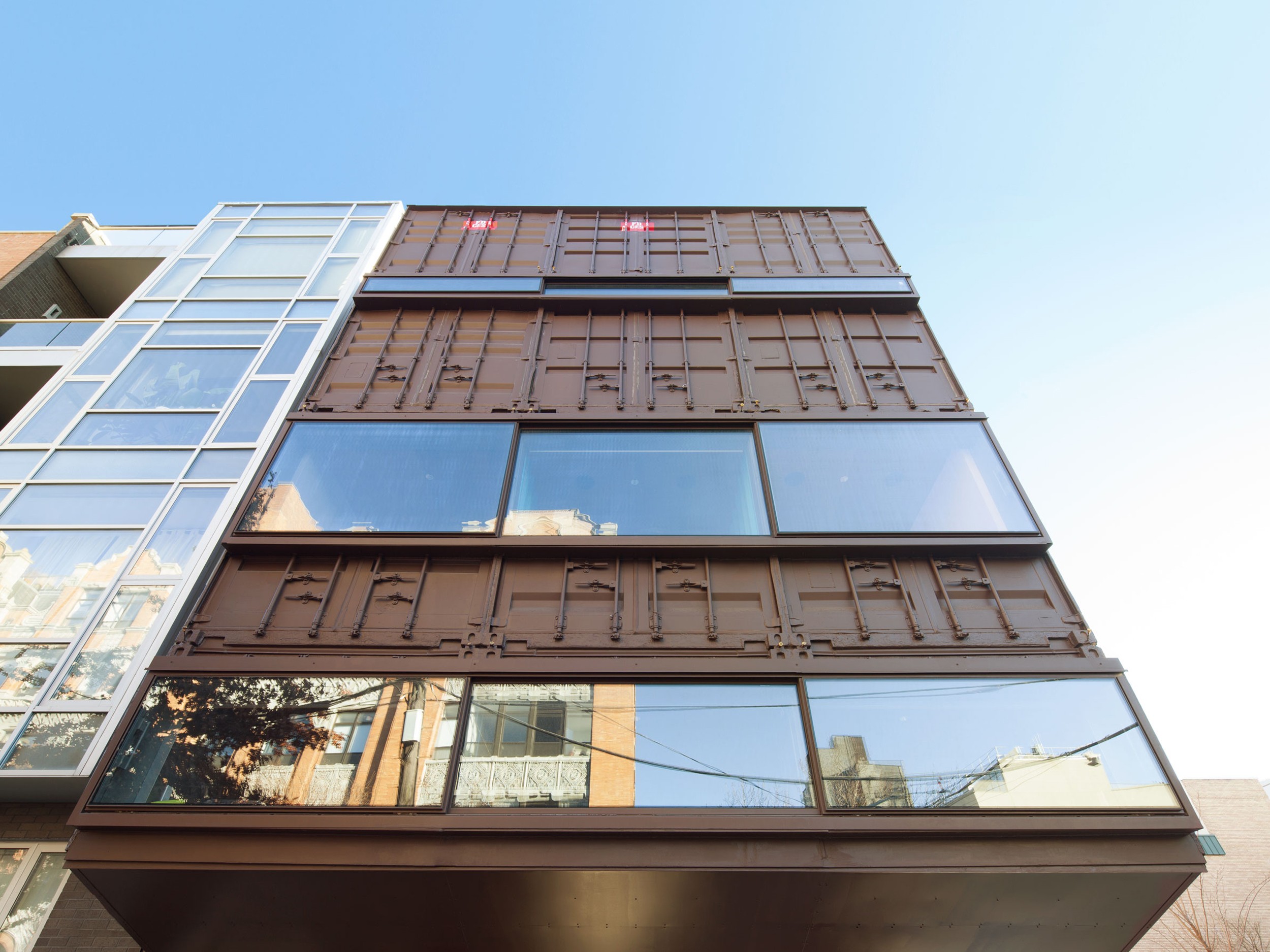
Carroll House by LOT-EK: Turning Shipping Containers into a Private Urban Home
Can shipping containers become high-quality residential architecture?
Carroll House, designed by LOT-EK in Williamsburg, Brooklyn, offers a powerful answer. Built on a compact 25×100-foot corner lot, the project transforms reused steel shipping containers into a contemporary single-family residence that feels both industrial and refined. According to LOT-EK’s current project description, the house repurposes 15 steel shipping containers and was completed in 2016.
What makes Carroll House especially relevant is not simply the use of containers. It is the way the architects transformed a rigid industrial module into a private, light-filled and spatially complex urban home.
Instead of hiding the container structure, LOT-EK uses it as the architectural identity of the project. The house does not try to make containers disappear. It elevates them, cuts them, opens them and reorganizes them into a strong residential form.
The result is a project that bridges two conditions: Williamsburg’s industrial past and its contemporary urban transformation.
A bold silhouette created through subtraction
The most recognizable feature of Carroll House is its diagonal cut.
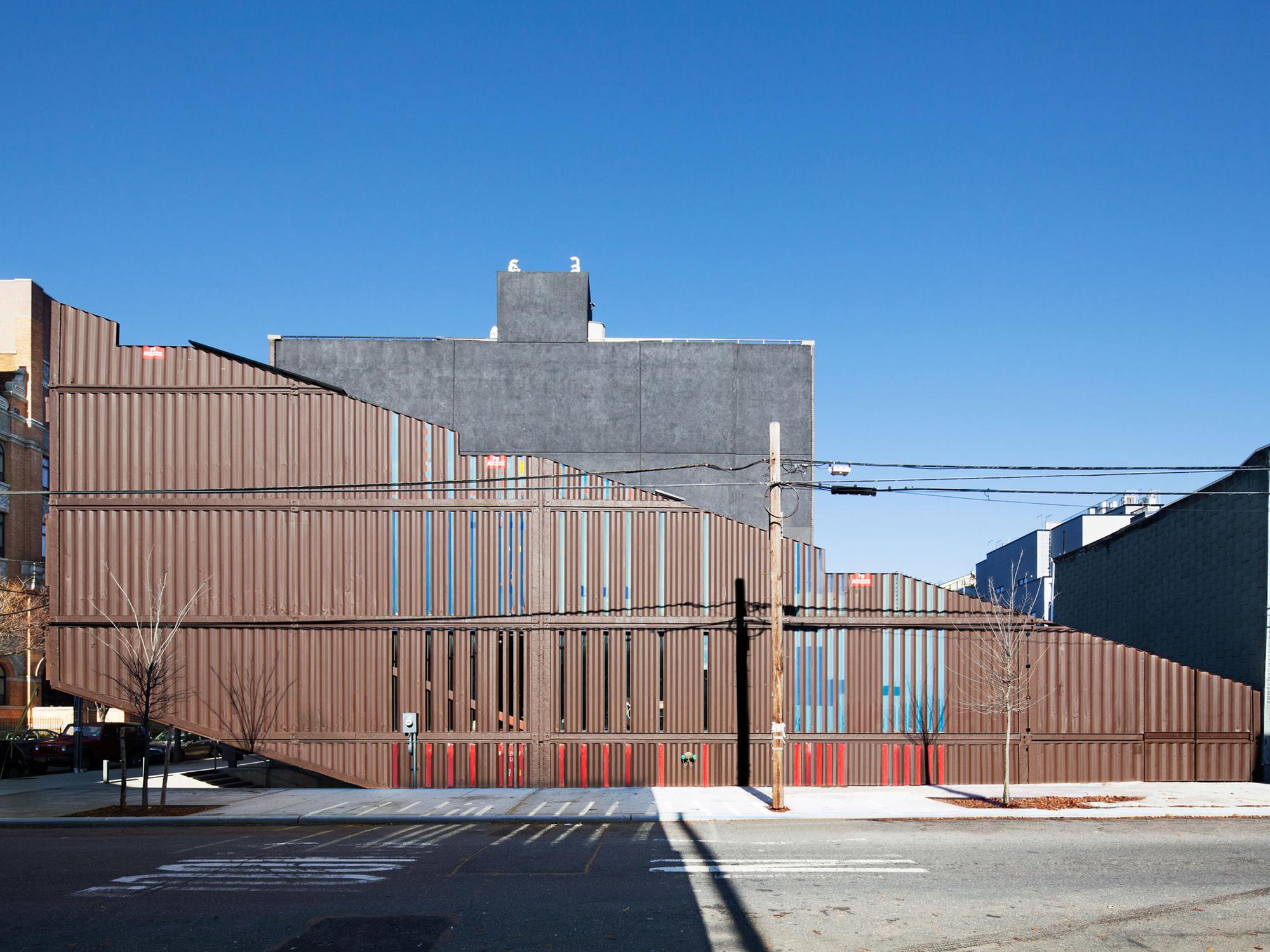
The stacked containers are cut along the top and bottom, generating a sharp monolithic volume within the dense Brooklyn street fabric. This operation gives the house its sculptural profile, but it is not only an aesthetic gesture. The diagonal cut also helps protect the privacy of the domestic spaces from the surrounding streets.
This is where the project becomes architecturally intelligent.
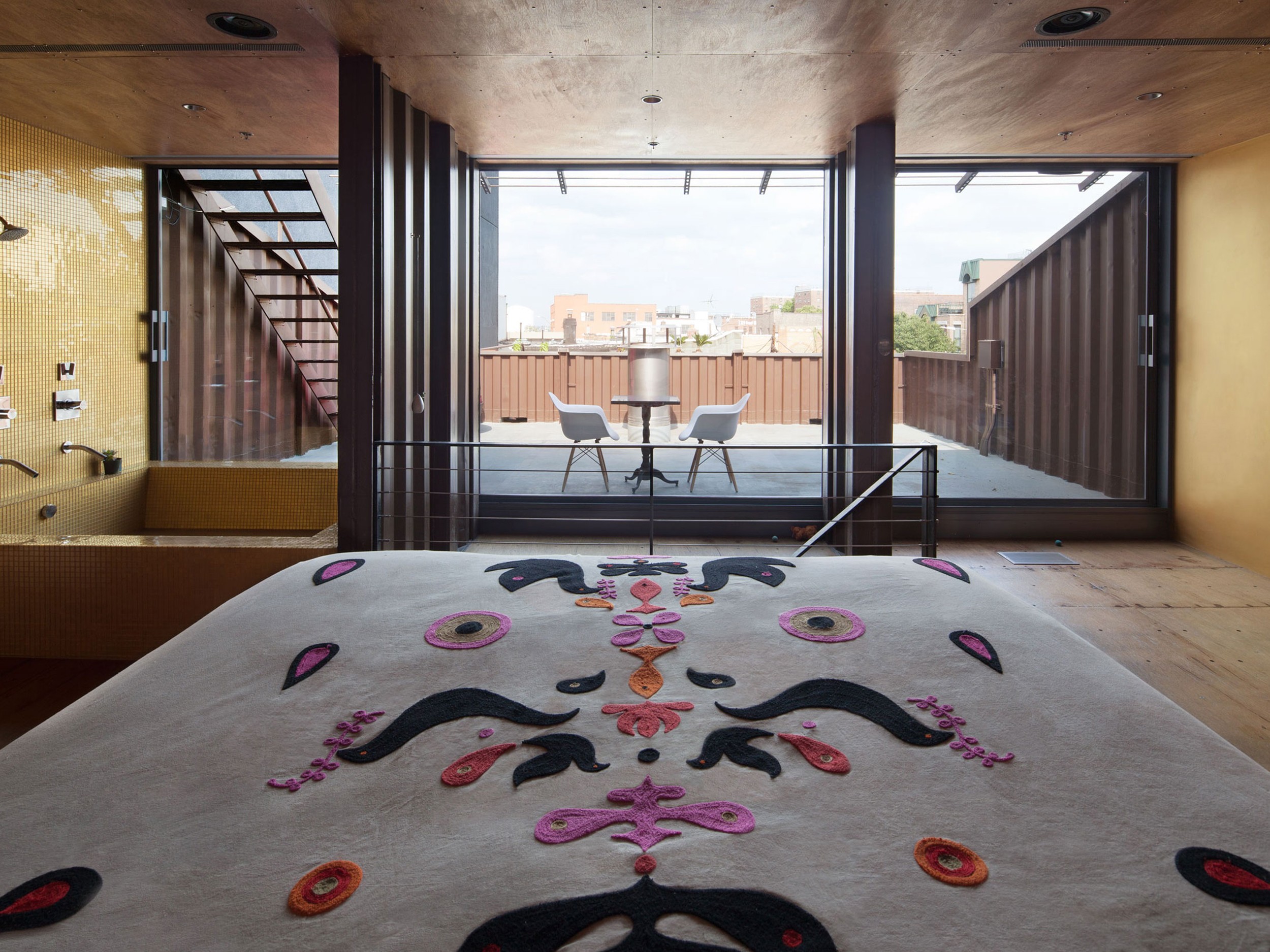
In a typical townhouse, the outdoor area is usually concentrated at the back of the lot, often as a single rear yard. Carroll House reinterprets this model. Instead of one traditional backyard, the diagonal cut creates a sequence of private outdoor decks distributed across different levels of the home.
The exterior space is no longer a leftover area at ground level. It becomes part of the vertical experience of the house.
A new relationship between interior and exterior
Carroll House is a dense urban residence, but it does not feel closed or defensive.
Large sliding glass walls connect the interior rooms to the private decks, bringing natural light deep into the home and strengthening the relationship between indoor and outdoor living. ArchDaily describes this continuity between interior spaces and enclosed decks as one of the main spatial strategies of the project.
The house therefore works through a delicate balance.
From the street, it appears solid, private and almost monolithic. From the inside, it opens toward protected outdoor rooms, creating moments of light, air and domestic intimacy.
This contrast is one of the strongest lessons of the project: privacy does not have to mean enclosure. A home can be protected from the city while still remaining open to light, ventilation and exterior space.
Industrial material, domestic atmosphere
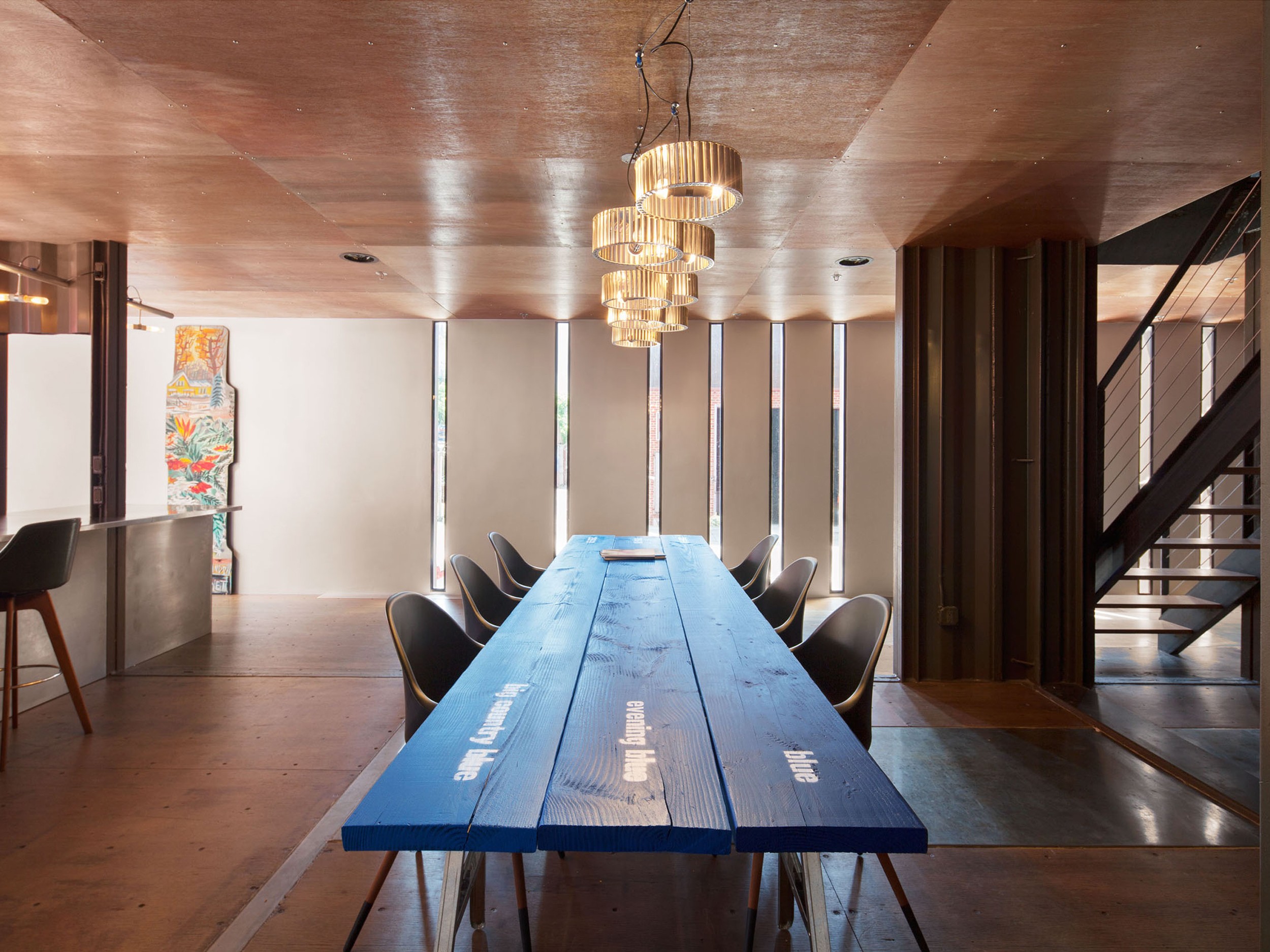
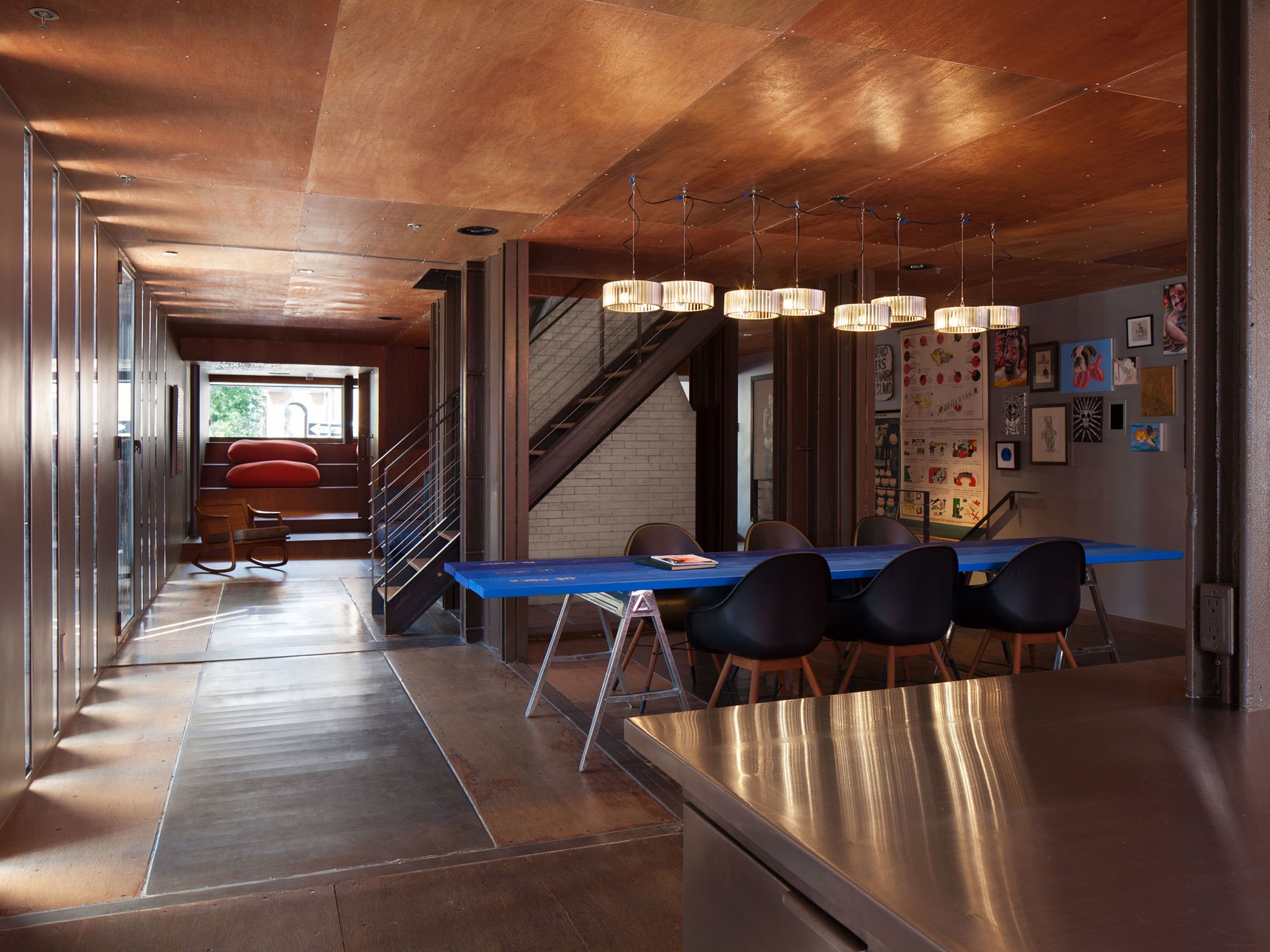
One of the most interesting aspects of Carroll House is the transformation of an industrial object into a domestic environment.
A shipping container is usually associated with logistics, transport and infrastructure. It is a standardized object, designed for movement rather than comfort. LOT-EK’s work challenges that perception by treating the container not as a limitation, but as a starting point for architectural invention.
The project does not rely on the container as a simple visual gimmick. It uses the container’s structural logic, repetition and material presence to create a house with a very specific identity.
The steel modules give the project its rhythm and strength. The diagonal cuts introduce spatial complexity. The glass openings bring lightness. The decks soften the relationship between the building and the city.
Together, these elements turn an industrial system into a contemporary urban home.
Sustainability through reuse and design intelligence
Carroll House is often discussed as an example of sustainable residential architecture because it reuses shipping containers. But, as with many strong container projects, the sustainable value is not limited to the material itself.
The real interest lies in how the project rethinks waste, structure and space.
LOT-EK’s approach is based on adaptive reuse: taking existing industrial objects and giving them a second architectural life. In Carroll House, the containers are not simply placed on site; they are cut, recomposed and integrated into a precise spatial strategy. ArchDaily notes that the container assembly was optimized by recombining leftover portions generated by the diagonal cuts.
This makes the project more sophisticated than a generic container conversion.
It is not just about using recycled material. It is about designing intelligently with the constraints and opportunities of that material.
Why Carroll House matters
Carroll House is important because it moves container architecture into a more mature conversation.
It is not a temporary pavilion.
It is not an emergency unit.
It is not a low-cost stereotype.
It is a private urban residence with a strong architectural identity, careful spatial organization and a refined relationship between material, privacy and light.
For architects, developers and homeowners, the lesson is clear: container architecture becomes powerful when the container is not treated as the final answer, but as the beginning of a design process.
A container alone is just an industrial module.
Architecture begins when that module is transformed into space, atmosphere and experience.
At FDAG Studio, this is the aspect of container architecture that interests us most: the possibility of turning existing industrial structures into meaningful, high-quality living environments.
Carroll House shows that modular architecture can be bold without being excessive, sustainable without being simplistic, and private without being closed.
It is a reminder that the future of residential design may not always begin with new materials.
Sometimes, it begins by looking differently at what already exists.
Read more

SecondLife 08 | The Dark Side Of Ocean Voyages
SecondLife is our editorial space where we explore how architecture can give new purpose to shipping containers. From iconic projects around the world to fresh ideas on circular design, we share stories that inspire a more sustainable and elegant future.

Alessandro Giametta
Co-Founder

SecondLife 07 | Containers are designed to Rust
SecondLife is our editorial space where we explore how architecture can give new purpose to shipping containers. From iconic projects around the world to fresh ideas on circular design, we share stories that inspire a more sustainable and elegant future.
Alessandro Giametta
Co-Founder
SecondLife 06 | WineBox Hotel by Grant Phelps & Camila Ulloa
SecondLife is our editorial space where we explore how architecture can give new purpose to shipping containers. From iconic projects around the world to fresh ideas on circular design, we share stories that inspire a more sustainable and elegant future.

Francesca Dipino
Co-Founder