
SecondLife is our editorial space where we explore how architecture can give new purpose to shipping containers. From iconic projects around the world to fresh ideas on circular design, we share stories that inspire a more sustainable and elegant future.

Francesca Dipino
Co-Founder
Urban Rigger by BIG: When Shipping Containers Become Floating Student Housing
How can container architecture become more than a sustainable gesture? How can it evolve into a real housing strategy-scalable, efficient, and deeply connected to the urban context?
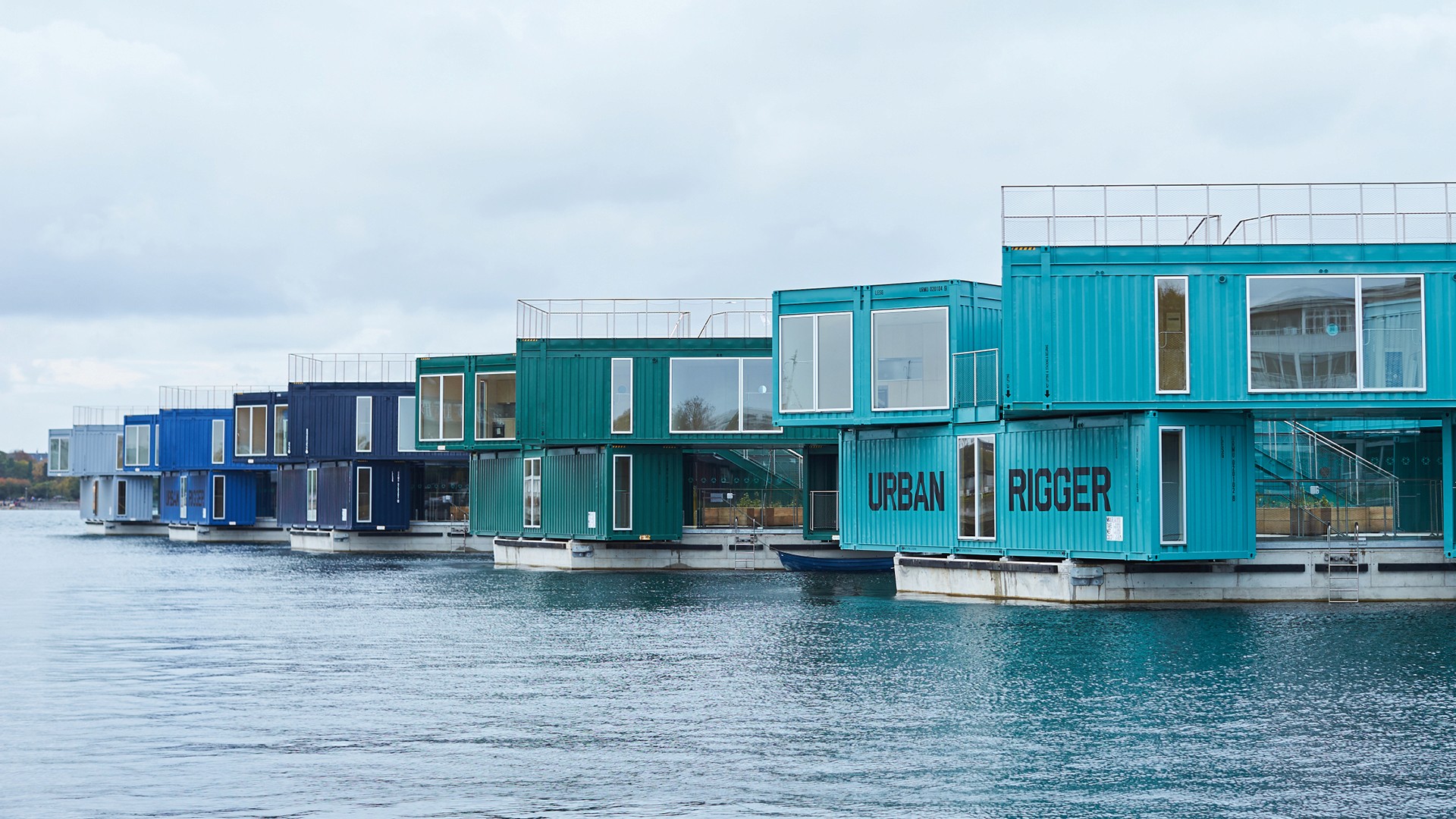
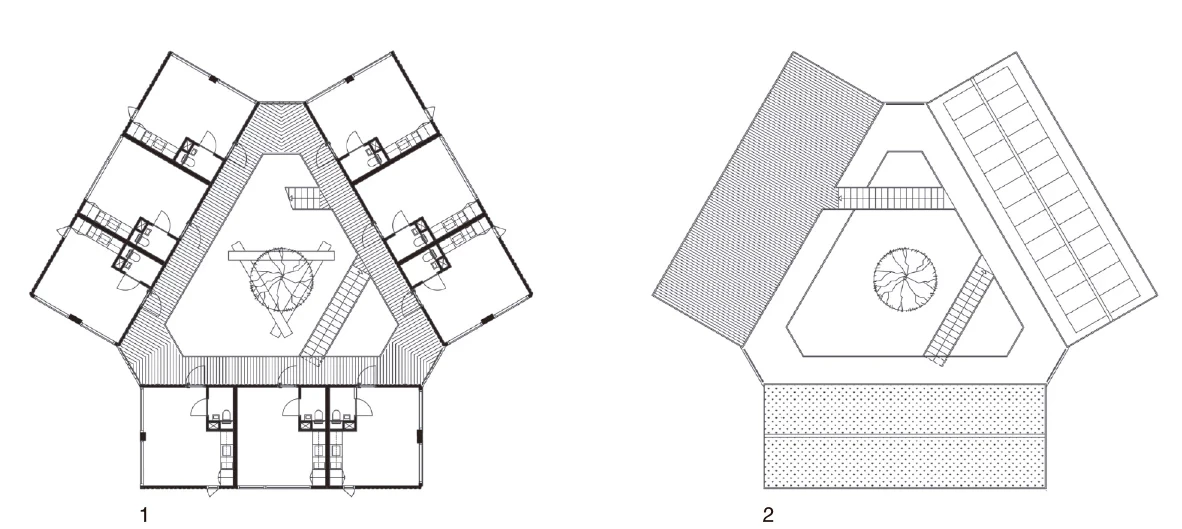
Urban Rigger, designed by BIG-Bjarke Ingels Group-offers one of the clearest answers to this question. Located on Copenhagen’s waterfront, the project transforms upcycled shipping containers into floating student housing, proving that modular architecture can be both pragmatic and visionary. BIG describes the basic unit as a composition of nine container units arranged to create twelve studio residences around a shared central garden.
What makes Urban Rigger particularly interesting is not simply the use of containers. It is the way those containers are reorganized into a complete living system.
Instead of treating the container as an isolated box, the project uses repetition, stacking and rotation to create a compact architectural community. The containers are arranged in a hexagonal formation, framing an internal courtyard that becomes the social heart of the project. This shared space gives the building a sense of intimacy and community, while the outward-facing units maintain a direct relationship with the water.
The result is a small floating neighborhood: private studios, shared outdoor areas, rooftop gardens and a strong connection to Copenhagen’s harbor environment.
A modular response to urban housing pressure
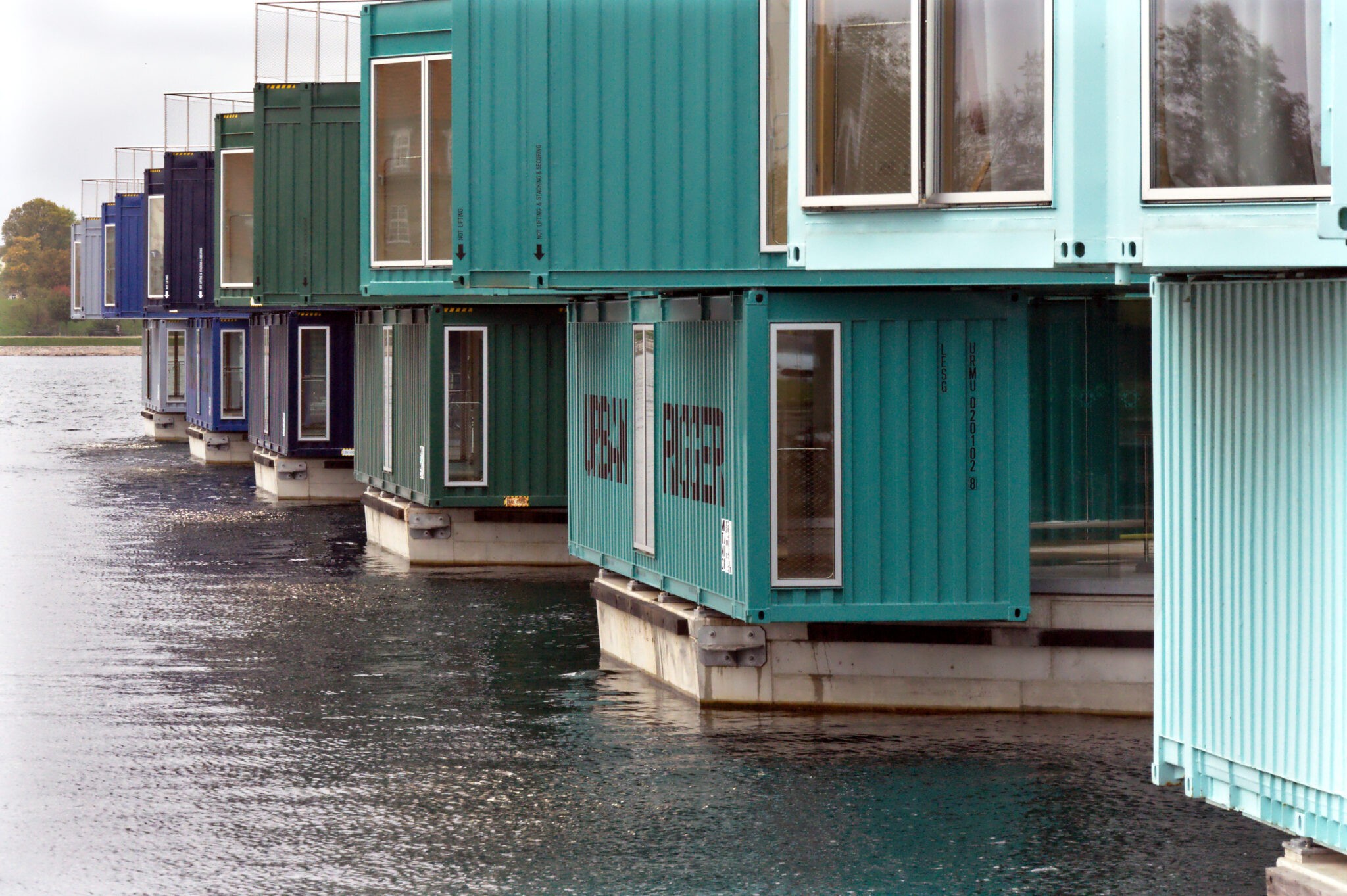
Urban Rigger was developed in response to a very specific problem: the shortage of affordable student housing in dense urban areas. Instead of competing for land in the city center, the project expands the idea of where housing can exist.
By moving onto the water, Urban Rigger uses underutilized harbor space and turns it into a habitable, flexible and potentially replicable urban model. This is where the project becomes more than a single architectural object. It becomes a prototype.
The official Urban Rigger platform now describes the project as having 72 apartments in Copenhagen’s harbor, showing how the original concept can grow from a single module into a larger student housing community.
Sustainability beyond materials
The sustainable value of Urban Rigger does not come only from the reuse of shipping containers.
The project combines recycled materials with a broader environmental strategy: a floating base, solar panels, rooftop gardens, low-energy systems and a hydro-source heating approach connected to the surrounding water. These features turn the building into a more complete energy-conscious system, rather than a simple container conversion.
This is an important distinction.
In architecture, sustainability should not be reduced to the material itself. A recycled container is not automatically sustainable just because it is reused. What matters is how it is transformed, insulated, connected, powered, maintained and integrated into its environment.
Urban Rigger is powerful because it treats the container as a starting point-not as the final idea.
Why this project still matters
Urban Rigger remains relevant because it challenges several assumptions at once.
It challenges the idea that student housing must be generic or low-quality.
It challenges the idea that containers are only temporary or industrial objects.
And it challenges the idea that cities can only grow by consuming more land.
Instead, it proposes an alternative: compact, modular, floating, community-driven housing.
For architects, developers and cities, the lesson is clear. Modular design is not about repetition for its own sake. It is about creating systems that can adapt, scale and respond intelligently to real needs.
From industrial object to architectural system
At FDAG Studio, we are interested in this exact transformation: the moment when an industrial object stops being perceived as a limitation and becomes an architectural opportunity.
Projects like Urban Rigger show that container architecture can move beyond the stereotype of “cheap alternative housing”. With the right design approach, containers can become part of a refined, efficient and forward-thinking architectural language.
The future of modular architecture is not just about building faster.
It is about building smarter-with systems that are flexible, resource-conscious and capable of creating meaningful spaces for people.
Urban Rigger is a strong reminder that innovation often begins with a simple question:
What if we looked at an existing object differently?
Read more

SecondLife 08 | The Dark Side Of Ocean Voyages
SecondLife is our editorial space where we explore how architecture can give new purpose to shipping containers. From iconic projects around the world to fresh ideas on circular design, we share stories that inspire a more sustainable and elegant future.

Alessandro Giametta
Co-Founder

SecondLife 07 | Containers are designed to Rust
SecondLife is our editorial space where we explore how architecture can give new purpose to shipping containers. From iconic projects around the world to fresh ideas on circular design, we share stories that inspire a more sustainable and elegant future.
Alessandro Giametta
Co-Founder
SecondLife 06 | WineBox Hotel by Grant Phelps & Camila Ulloa
SecondLife is our editorial space where we explore how architecture can give new purpose to shipping containers. From iconic projects around the world to fresh ideas on circular design, we share stories that inspire a more sustainable and elegant future.
Francesca Dipino
Co-Founder