
SecondLife is our editorial space where we explore how architecture can give new purpose to shipping containers. From iconic projects around the world to fresh ideas on circular design, we share stories that inspire a more sustainable and elegant future.

Francesca Dipino
Co-Founder
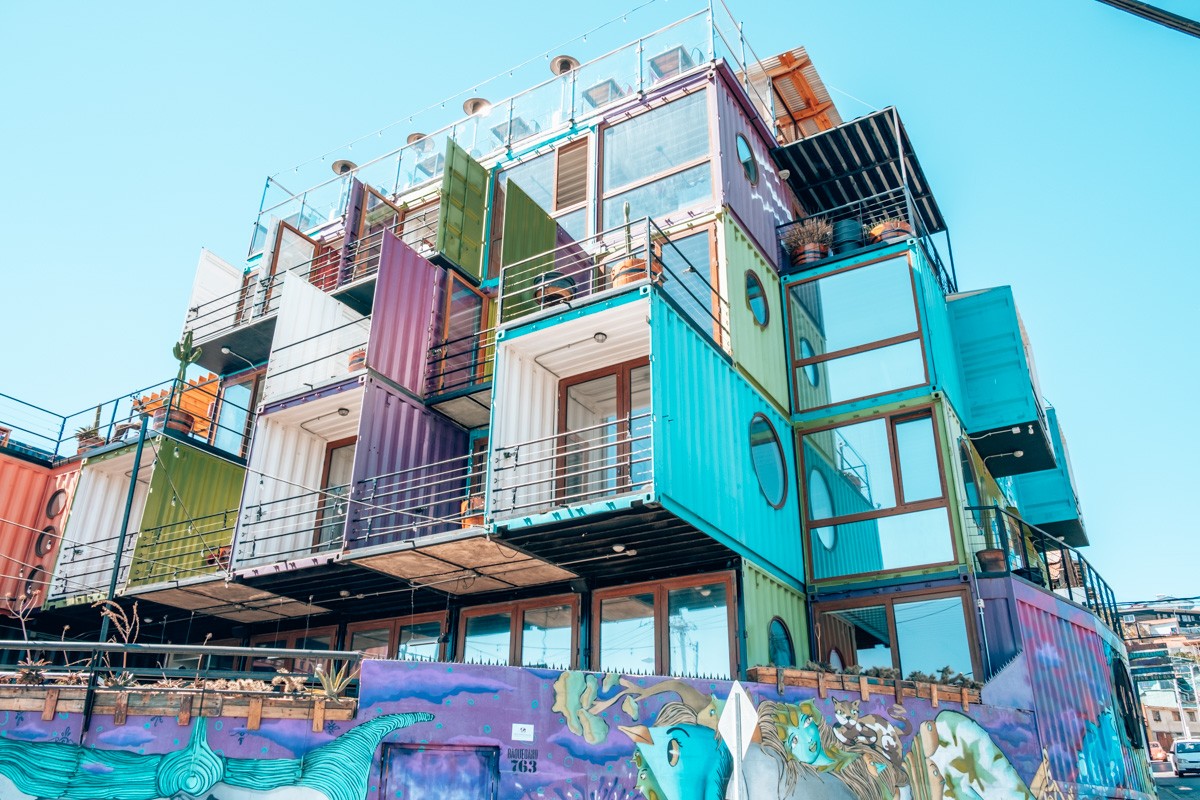
WineBox Hotel: When a Port City Becomes Architecture
In a port city, shipping containers are not foreign objects. They belong to the landscape.
They are part of the visual memory of harbors, trade routes, cranes, ships and industrial infrastructure. In Valparaíso, Chile - a city defined by its hills, its port, its colors and its relationship with the Pacific Ocean - the shipping container becomes more than a logistical object. It becomes architectural material.
WineBox Hotel transforms this everyday industrial presence into a boutique hospitality experience overlooking the city and the harbor.
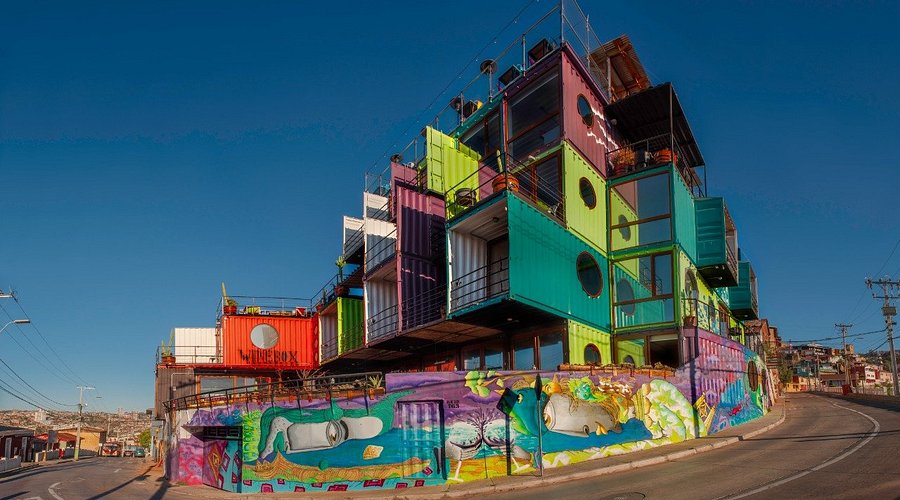
Located on Mariposa Hill, the hotel offers wide views over Valparaíso, its port, its hills and the surrounding coastline. The project was built using 25 reused shipping containers, turning a material associated with global transport into a place for staying, gathering and experiencing the city.
What makes WineBox interesting is not simply that it is made from containers.
It is that the project does not try to erase their origin.
Instead, it turns that origin into identity.
Architecture shaped by the city
Valparaíso is not a neutral backdrop.
Its architecture is colorful, fragmented, vertical and layered. Houses climb the hills. Streets bend, rise and overlap. The city itself feels like a composition of additions, adaptations and improvisations.
WineBox Hotel responds to this context through a similar language.
The containers are stacked, shifted and exposed, creating a building that feels assembled rather than polished. Its modular repetition echoes the logic of the port, while its colorful surfaces and artistic interventions connect it to the visual energy of Valparaíso’s urban culture.
This is where the project becomes architectural.
The container is not used as a generic sustainable symbol. It becomes a way to speak the same language as the city: industrial, colorful, informal, direct and expressive.
From industrial module to boutique hotel
WineBox Hotel works by transforming that rigidity that belongs to a shipping container into experience.
Strategic openings, terraces and balconies allow the rooms to engage with the surrounding landscape, creating a strong relationship between interior space and panoramic views. Hotel Designs describes the project as an aparthotel and winery formed from 25 decommissioned shipping containers, with 21 graffiti-styled guestrooms and public terraces overlooking the city.
This transformation is important.
A container hotel could easily become repetitive or purely functional. WineBox does the opposite: it turns the container into a room with character, view, color and atmosphere.
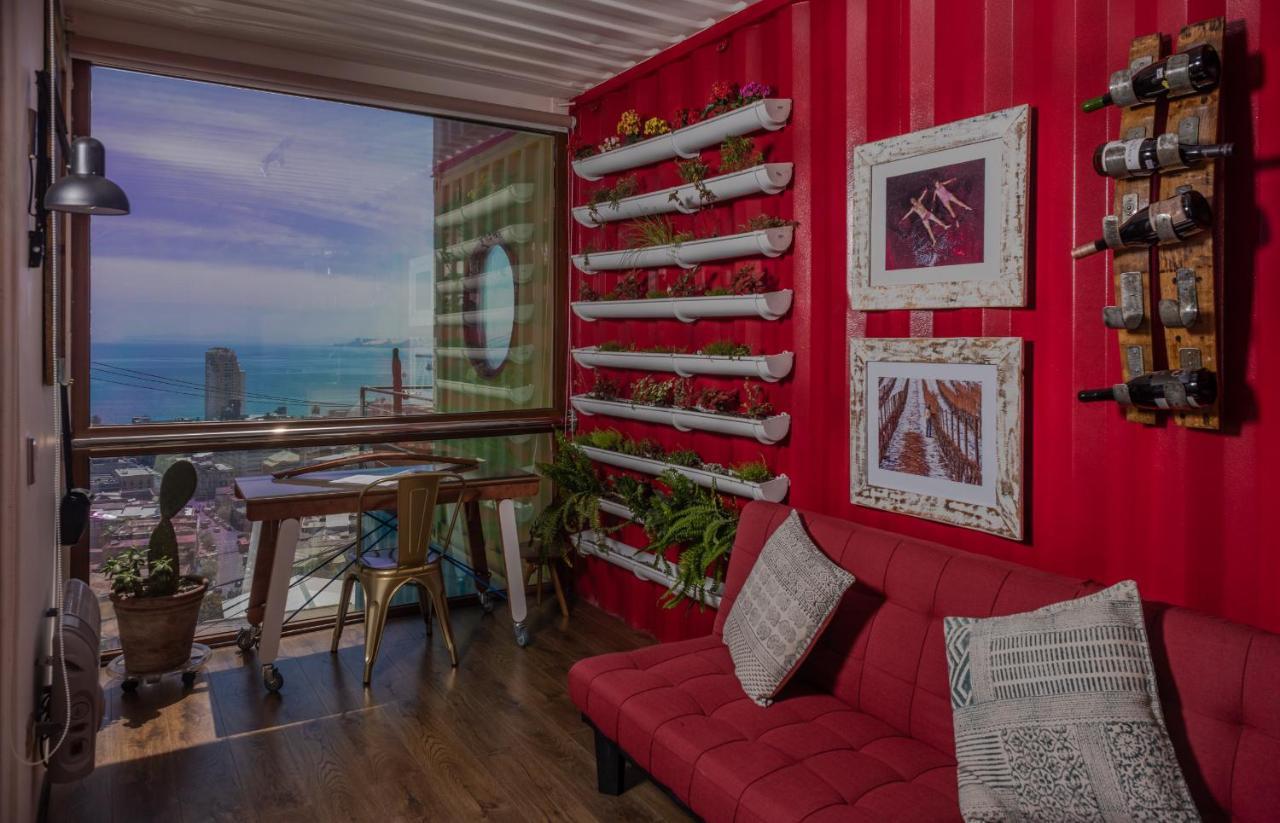
The industrial module becomes hospitality.
Reuse as architectural identity
In many projects, sustainability is hidden behind technical systems.
At WineBox, reuse is visible.
The container walls, exposed steel, recycled elements and reclaimed materials become part of the experience of the building. According to Great Wine Capitals, the hotel incorporates recycled and upcycled finishes, including furniture made from pallet wood, wine barrels, old tubs, container walls and container doors removed during the transformation process.
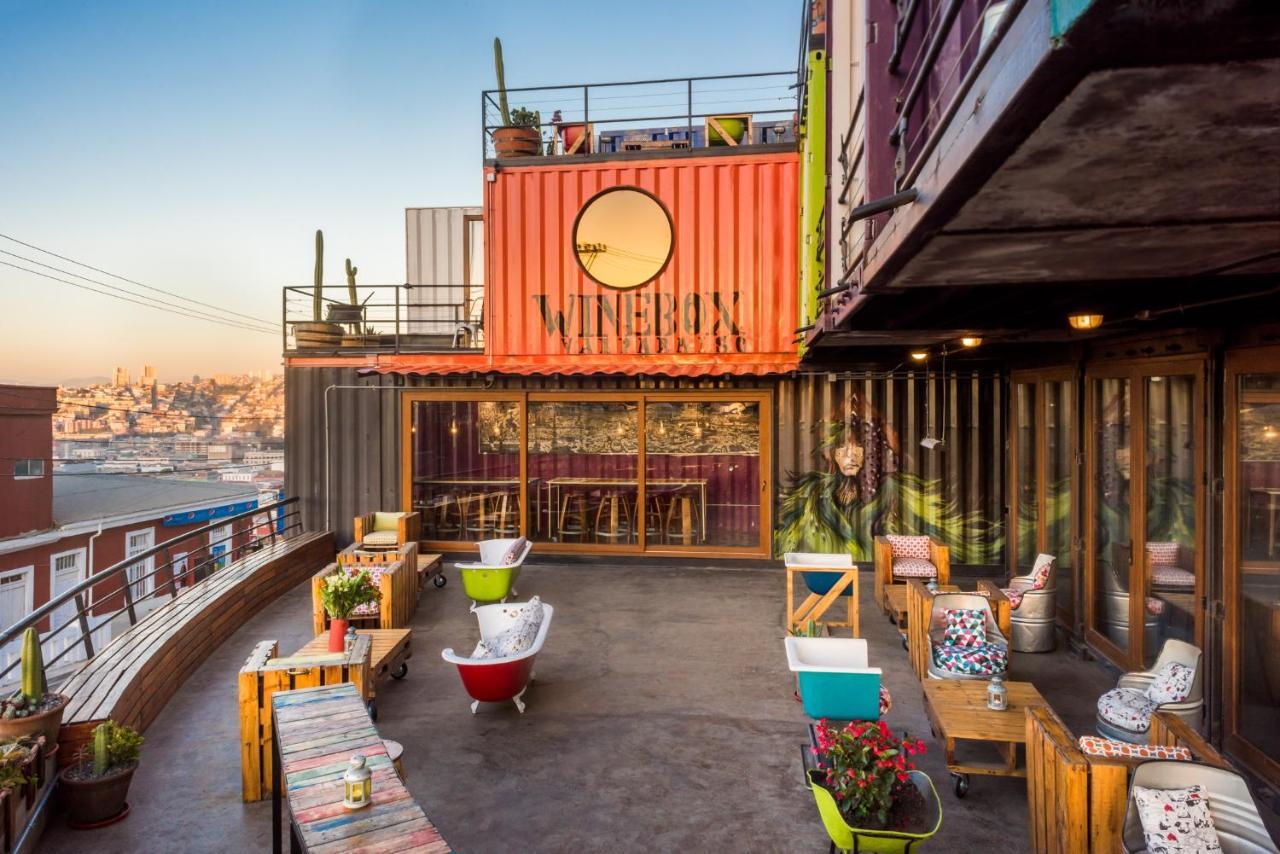
This gives the project a stronger architectural message.
Reuse is not treated as a background strategy.
It becomes the language of the building.
The guest does not simply stay inside a sustainable hotel. The guest sees, touches and experiences the logic of reuse throughout the space.
That is what makes WineBox different from a conventional boutique hotel with a “green” narrative added afterward. Here, the sustainable idea is embedded in the construction, the interiors and the identity of the place.
A hotel between wine, art and sustainability
WineBox is not only a container building.
It is also connected to Chilean wine culture and to the artistic identity of Valparaíso. Great Wine Capitals describes the project as a place where guests experience the city through art, wine and sustainability, with local and international artists invited to intervene in rooms and common areas.
This matters because architecture is not only about form.
A building becomes stronger when it creates relationships: with local materials, local culture, local economies and local stories.
In WineBox Hotel, the container becomes the starting point for a broader experience. It connects the port to the hotel, the wine culture to the interiors, the city’s street art to the façade, and sustainability to the guest experience.
The result is not a neutral building.
It is a place with a clear point of view.
Why WineBox Hotel matters
WineBox Hotel matters because it shows that container architecture does not have to be silent, minimal or anonymous.
It can be expressive.
It can be local.
It can be colorful.
It can belong to a place.
This is an important lesson for architecture.
The value of a reused material is not only environmental. It can also be cultural. A container carries with it an industrial memory, but that memory can be redirected, transformed and rooted in a specific context.
In Valparaíso, the container is not imported as an aesthetic trend.
It already belongs to the city’s port identity.
WineBox Hotel simply makes that relationship visible.
A second life as a design beginning
Rather than erasing the past life of its materials, WineBox Hotel turns it into architecture.
The project shows that reuse is not only a technical operation. It is a design attitude. It asks architects, developers and guests to look differently at what already exists.
At FDAG Studio, this is exactly what interests us about container architecture.
A material’s second life should not be treated as a compromise.
It can become the beginning of the architectural concept.
WineBox Hotel reminds us that the most interesting architecture does not always start from a blank page.
Sometimes, it starts from an object that has already travelled the world - and is ready to belong somewhere new.
Read more

SecondLife 08 | The Dark Side Of Ocean Voyages
SecondLife is our editorial space where we explore how architecture can give new purpose to shipping containers. From iconic projects around the world to fresh ideas on circular design, we share stories that inspire a more sustainable and elegant future.

Alessandro Giametta
Co-Founder
SecondLife 07 | Containers are designed to Rust
SecondLife is our editorial space where we explore how architecture can give new purpose to shipping containers. From iconic projects around the world to fresh ideas on circular design, we share stories that inspire a more sustainable and elegant future.
Alessandro Giametta
Co-Founder
SecondLife 06 | WineBox Hotel by Grant Phelps & Camila Ulloa
SecondLife is our editorial space where we explore how architecture can give new purpose to shipping containers. From iconic projects around the world to fresh ideas on circular design, we share stories that inspire a more sustainable and elegant future.
Francesca Dipino
Co-Founder