
SecondLife is our editorial space where we explore how architecture can give new purpose to shipping containers. From iconic projects around the world to fresh ideas on circular design, we share stories that inspire a more sustainable and elegant future.

Francesca Dipino
Co-Founder
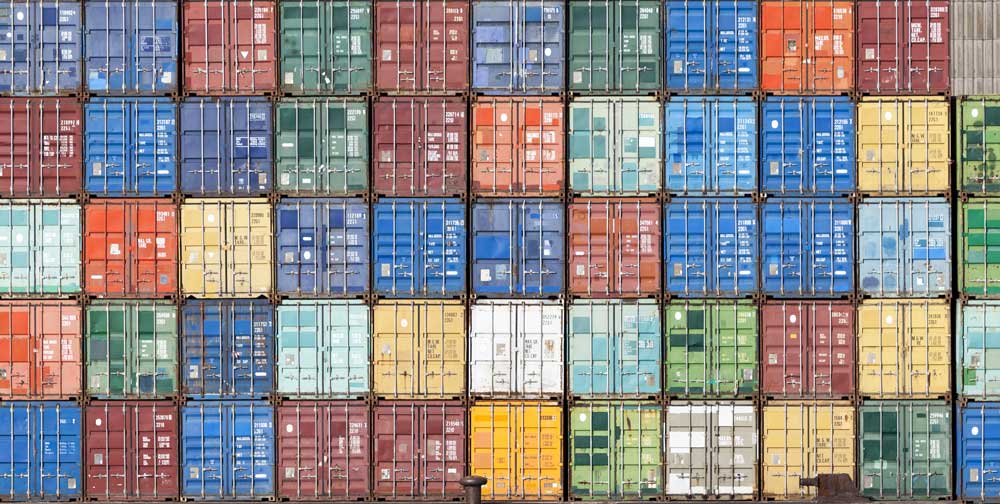
Shipping Containers: From Industrial Surplus to Circular Material
The future of architecture may not begin with a new material.
It may begin with an existing one.
Every year, the built environment consumes enormous quantities of raw materials, energy and land. According to the latest UNEP and GlobalABC data, the buildings and construction sector accounts for around 37% of global CO₂ emissions and nearly 50% of global material extraction.
This means that every design decision — from structure to finishes, from demolition to reuse — is no longer only an aesthetic or technical choice. It is also an environmental one.
In this context, the shipping container becomes more than an industrial object. It becomes a question.
What happens when a structure originally designed for global trade is no longer treated as waste, but as a material with architectural potential?
A material already produced
A shipping container is not born for architecture.
It is born for movement: to cross oceans, withstand heavy loads, resist harsh weather conditions and be stacked in complex logistical systems. Its original purpose is industrial, not domestic.
And yet, precisely because of this, the container already contains several qualities that architecture constantly searches for: strength, modularity, transportability, standardization and structural clarity.
The problem is not the object itself.
The problem is what happens when that object is no longer economically useful within the logistics system.
In the United States, trade imbalances mean that many containers arriving full often leave empty. DAT Freight & Analytics reports that in the three largest U.S. port areas, around three out of four loaded import containers typically return empty.
This reveals a deeper inefficiency: a global system capable of moving enormous volumes of material, but not always capable of giving that material a meaningful second life.
From linear consumption to circular design
For decades, the construction industry has worked through a mostly linear logic:
extract, produce, build, demolish, discard.
Circular design asks a different question: how can we keep materials in use for as long as possible, at the highest possible value?
The Ellen MacArthur Foundation defines the circular economy as a system where materials never become waste, based on three core principles: eliminating waste and pollution, circulating products and materials, and regenerating nature.
Applied to architecture, this changes the way we look at materials.
A material is no longer judged only by how it performs today, but by what it can become tomorrow.
Can it be reused?
Can it be adapted?
Can it be disassembled?
Can it remain valuable after its first life?
This is where the shipping container becomes especially interesting.
It is not just a recycled object. It is a ready-made structural module that can be reinterpreted through design.
The container as architectural raw material
The architectural value of a container does not lie in using it exactly as it is.
A container alone is still a container.
Architecture begins when that industrial module is transformed: cut, insulated, reinforced, opened, connected, elevated, combined, protected and inhabited.
This transformation is crucial.
Without design intelligence, container architecture risks becoming a superficial gesture: a symbol of sustainability rather than a real sustainable strategy.
But when handled properly, the container can become part of a broader architectural system. It can reduce the need for new structural material, shorten construction processes, support modular growth and allow buildings to adapt over time.
Its value is not only environmental. It is spatial, economic and cultural.
It allows architecture to work with what already exists.
Waste is not always waste
One of the most powerful shifts in sustainable design is learning to see waste differently.
Waste is often not a material problem.
It is a design problem.
An object becomes waste when we stop imagining a use for it.
The shipping container challenges this idea because it sits between two worlds. In logistics, it is a tool. In architecture, it can become structure, room, façade, module or entire building system.
This transition is what makes it relevant for the future of materials.
Not because every building should be made from containers.
But because containers reveal a larger principle: the future of construction cannot rely only on producing new materials. It must also learn how to reinterpret existing ones.
A second life for industrial materials
At FDAG Studio, we are interested in the moment when an industrial object becomes architecture.
A container carries the traces of movement, trade, durability and global infrastructure. It is not a neutral material. It has a story before it becomes a building.
Giving it a second life means more than reusing steel.
It means transforming an object of logistics into a space for living, working, hosting, gathering or resting.
This is why container architecture belongs naturally within the conversation about materials. It is not only about modular construction. It is about material intelligence.
The question is no longer only:
What can we build?
But also:
What can we transform?
Every container already has a first life.
Architecture can give it a second one.
Read more

SecondLife 08 | The Dark Side Of Ocean Voyages
SecondLife is our editorial space where we explore how architecture can give new purpose to shipping containers. From iconic projects around the world to fresh ideas on circular design, we share stories that inspire a more sustainable and elegant future.

Alessandro Giametta
Co-Founder

SecondLife 07 | Containers are designed to Rust
SecondLife is our editorial space where we explore how architecture can give new purpose to shipping containers. From iconic projects around the world to fresh ideas on circular design, we share stories that inspire a more sustainable and elegant future.
Alessandro Giametta
Co-Founder

SecondLife 06 | WineBox Hotel by Grant Phelps & Camila Ulloa
SecondLife is our editorial space where we explore how architecture can give new purpose to shipping containers. From iconic projects around the world to fresh ideas on circular design, we share stories that inspire a more sustainable and elegant future.
Francesca Dipino
Co-Founder