
SecondLife is our editorial space where we explore how architecture can give new purpose to shipping containers. From iconic projects around the world to fresh ideas on circular design, we share stories that inspire a more sustainable and elegant future.

Francesca Dipino
Co-Founder
Incubo House: When Industrial Materials Find a Second Life
Not all sustainable architecture begins with something new.
Sometimes, it begins with what already exists.
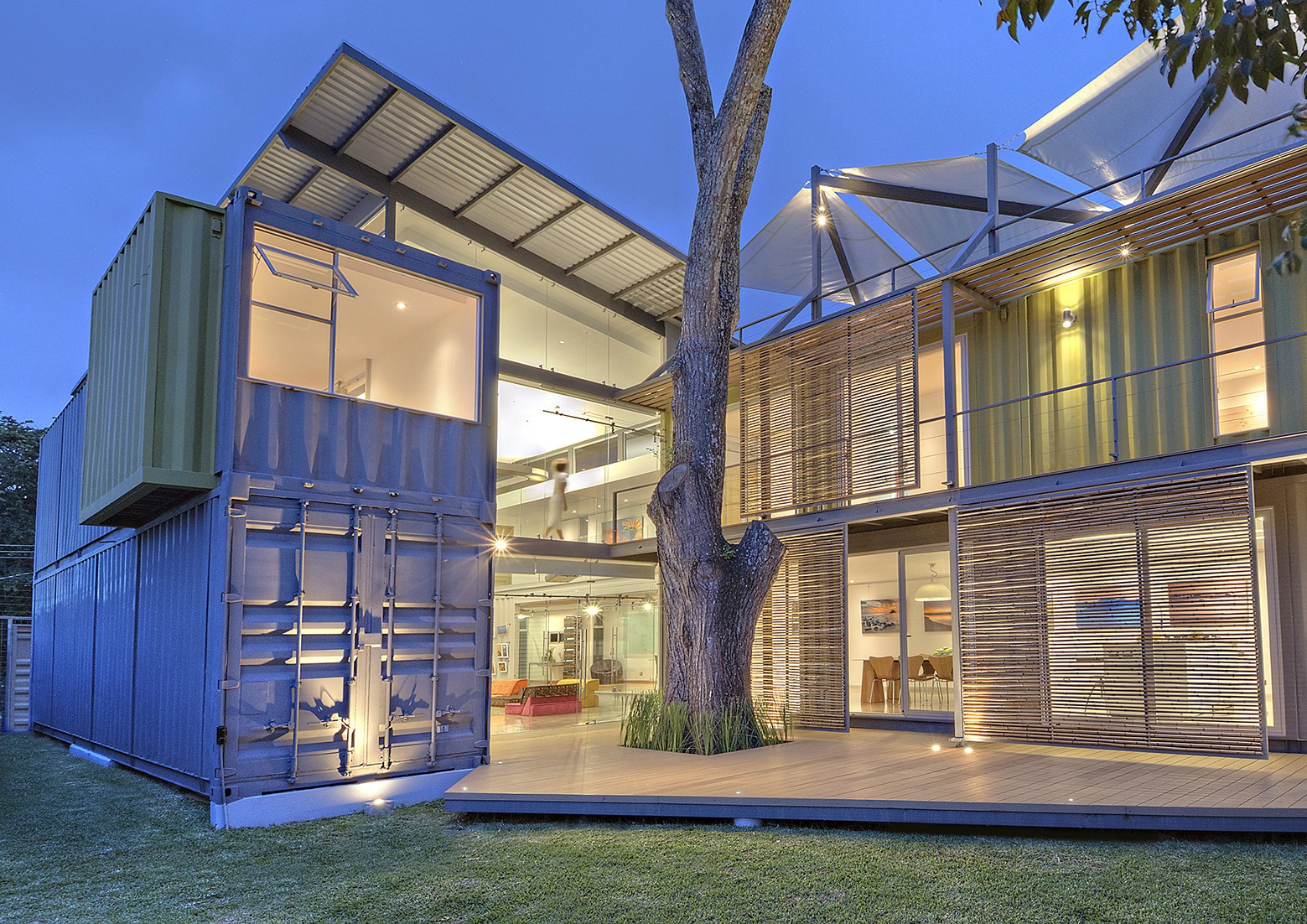
Incubo House, designed by María José Trejos in Escazú, Costa Rica, is a powerful example of how industrial elements can be redirected toward domestic life without erasing their previous identity. The project uses reused shipping containers not as a visual gimmick, but as the structural and conceptual foundation for a contemporary home surrounded by nature.
What makes Incubo House especially relevant is the way it treats the container.
The container is not hidden.
It is not disguised.
It is transformed.
Its industrial memory remains visible, but its purpose changes completely. What was once designed for movement, logistics and global trade becomes a place for living, working, gathering and creating.
This is where the project becomes more than a container house. It becomes a lesson in material transformation.
A house built from existing industrial modules
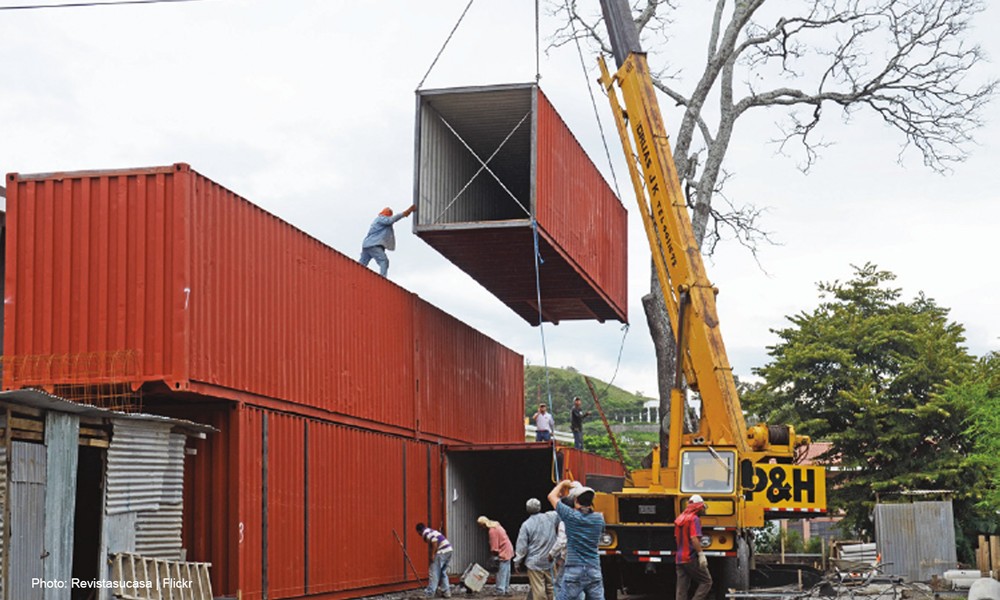
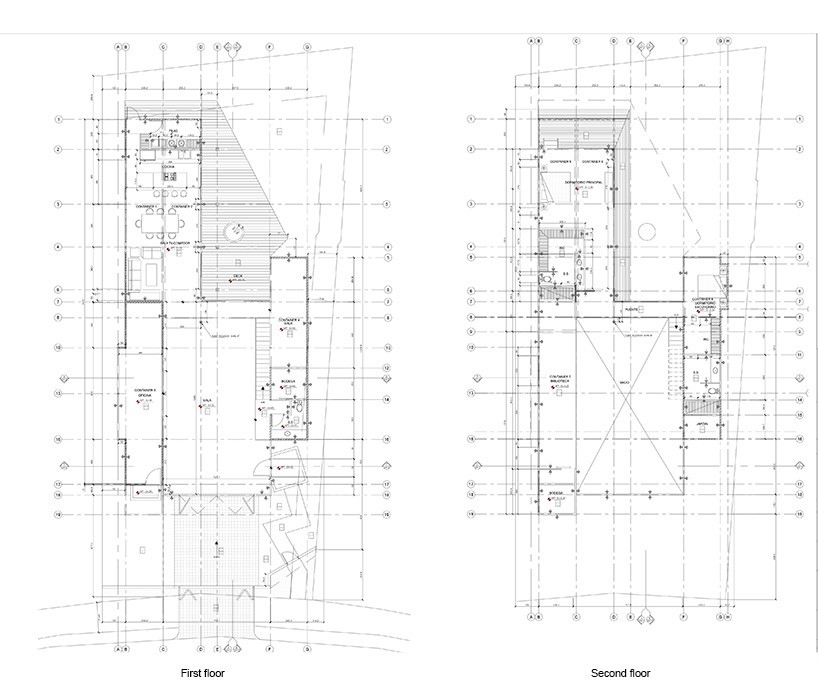
Incubo House was conceived as a modular system made from eight reusable 40-foot High Cube containers, organized around a central two-story volume that connects the different parts of the home.
This central space is one of the most important elements of the project.
It is not just a circulation area. It acts as the architectural core of the house: a flexible space that can shift between social area, workspace, photography studio, audiovisual room or creative environment depending on the needs of the occupants.
In this sense, the project questions the idea that a home should be fixed and rigid.
Instead, Incubo House proposes a more adaptable way of living. The house can change according to use, time of day and activity. Its architecture is not based on excess, but on efficiency, flexibility and transformation.
Designing with memory, not against it
One of the most interesting aspects of container architecture is that the material already has a history.
A shipping container is never neutral. Before becoming architecture, it belongs to another system: ports, ships, cranes, warehouses, routes, distance and trade.
Incubo House does not erase this memory.
Instead, it allows the container’s industrial character to remain part of the architectural language. The steel modules still communicate strength, repetition and modularity, but they are softened by light, vegetation, bamboo, wood and domestic use.
This creates a strong contrast: industrial structure and natural context, reuse and comfort, raw material and inhabited space.
That contrast is what gives the house its identity.
Nature as part of the material strategy
Incubo House is not only about reusing containers.
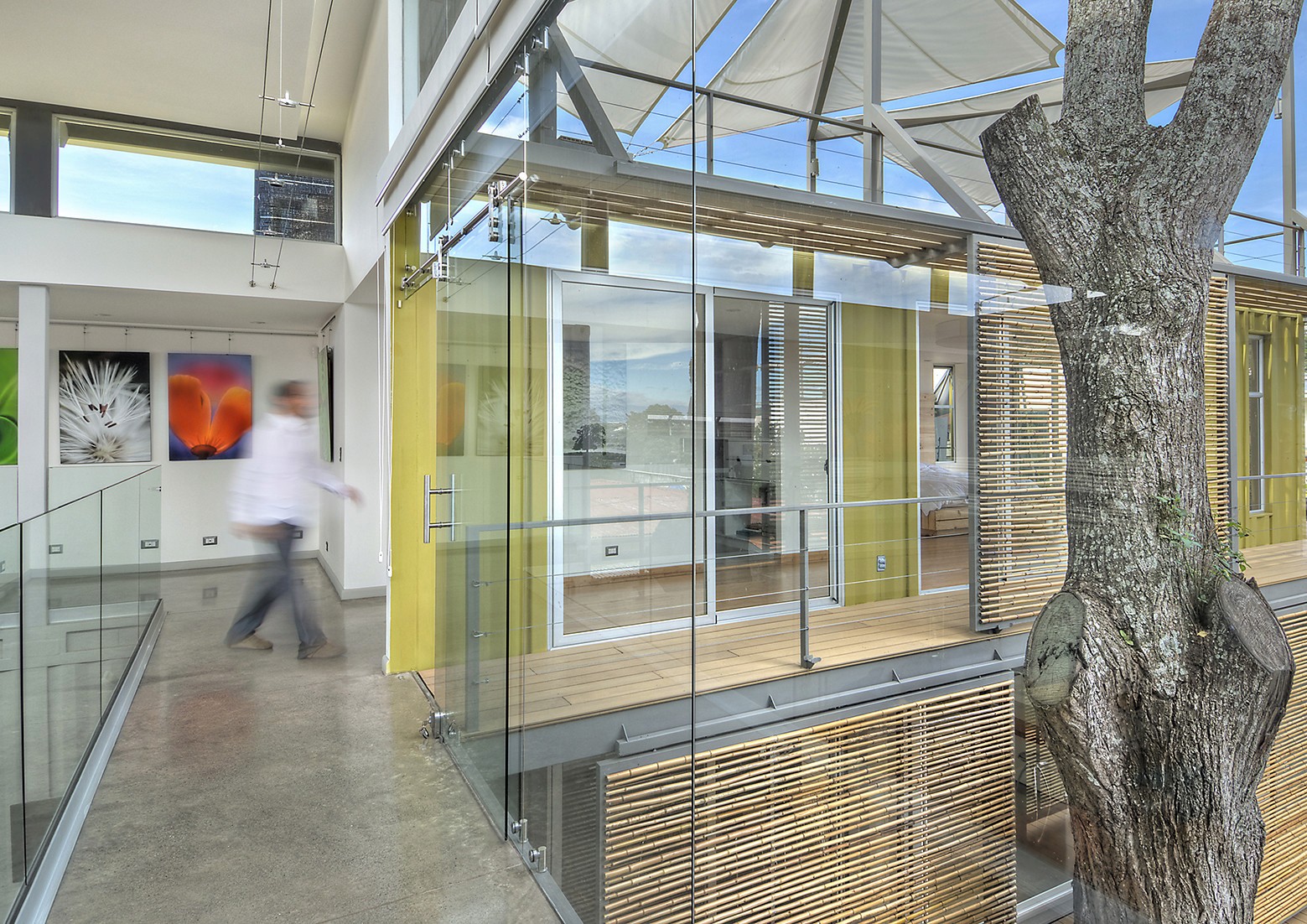
The project is also shaped by the site itself. According to ArchDaily, an existing cedar tree played a central role in the layout of the house, with the design organized so the tree could be seen from different points within the home.
This is an important design decision.
The tree is not treated as an obstacle to construction. It becomes part of the architecture.
Branches from the cedar tree were also reused in stairs and furniture elements, extending the idea of reuse beyond the container itself.
Here, sustainability is not presented as a single technological solution. It becomes a broader attitude: preserve what is already there, reuse what has value, and design around existing conditions rather than replacing them.
Passive comfort and material intelligence
The environmental strategy of Incubo House is based on a combination of reused materials and passive design.
The central double-height volume works as a ventilation lung, encouraging cross ventilation and reducing the need for air conditioning. The western glass façade brings natural light into the interior, reducing the need for artificial lighting during the day.
Architizer also notes several additional sustainable strategies: rainwater collection for toilets and irrigation, solar-heated hot water, future preparation for solar panels, reused container doors, bamboo, polished concrete, and decking made from certified renewable wood mixed with recycled plastic.
This is why Incubo House fits naturally within a “Materials” conversation.
Its value is not only in the container as an object, but in the way different materials and systems are combined: steel, bamboo, wood, recycled plastic, glass, concrete, vegetation and natural ventilation.
The result is not a house that simply looks sustainable.
It is a house that uses material choices as part of a larger environmental and spatial strategy.
Circular thinking as a design position
Circular design is often described through technical terms: reuse, recycling, low impact, embodied carbon, lifecycle.
But Incubo House reminds us that circular thinking is also cultural.
It is about learning to see value where others might see limitation.
It is about choosing transformation over replacement.
It is about allowing materials to carry memory into a new function.
The shipping container is a perfect example of this idea.
In its first life, it is infrastructure.
In its second life, it becomes architecture.
This shift does not happen automatically. It requires design intelligence. A container does not become a good building simply because it is reused. It needs to be cut, insulated, opened, ventilated, protected, connected and adapted to human life.
Incubo House demonstrates this clearly: sustainability is not only the act of reusing something. It is the ability to transform that object into a meaningful spatial experience.
Why Incubo House matters
Incubo House matters because it avoids two common mistakes in container architecture.
It does not treat the container as a cheap shortcut.
And it does not treat sustainability as an aesthetic label.
Instead, it shows how an industrial element can become part of a refined domestic system, where reuse, flexibility, passive comfort and site sensitivity work together.
At FDAG Studio, this is exactly how we understand design: not as the production of objects from zero, but as the transformation of existing potential.
A material can have more than one life.
A structure can change purpose.
An industrial object can become a home.
Because circular thinking is not only about building differently.
It is about deciding what deserves a second life.
Read more

SecondLife 08 | The Dark Side Of Ocean Voyages
SecondLife is our editorial space where we explore how architecture can give new purpose to shipping containers. From iconic projects around the world to fresh ideas on circular design, we share stories that inspire a more sustainable and elegant future.

Alessandro Giametta
Co-Founder
SecondLife 07 | Containers are designed to Rust
SecondLife is our editorial space where we explore how architecture can give new purpose to shipping containers. From iconic projects around the world to fresh ideas on circular design, we share stories that inspire a more sustainable and elegant future.
Alessandro Giametta
Co-Founder
SecondLife 06 | WineBox Hotel by Grant Phelps & Camila Ulloa
SecondLife is our editorial space where we explore how architecture can give new purpose to shipping containers. From iconic projects around the world to fresh ideas on circular design, we share stories that inspire a more sustainable and elegant future.
Francesca Dipino
Co-Founder