
SecondLife is our editorial space where we explore how architecture can give new purpose to shipping containers. From iconic projects around the world to fresh ideas on circular design, we share stories that inspire a more sustainable and elegant future.

Alessandro Giametta
Co-Founder
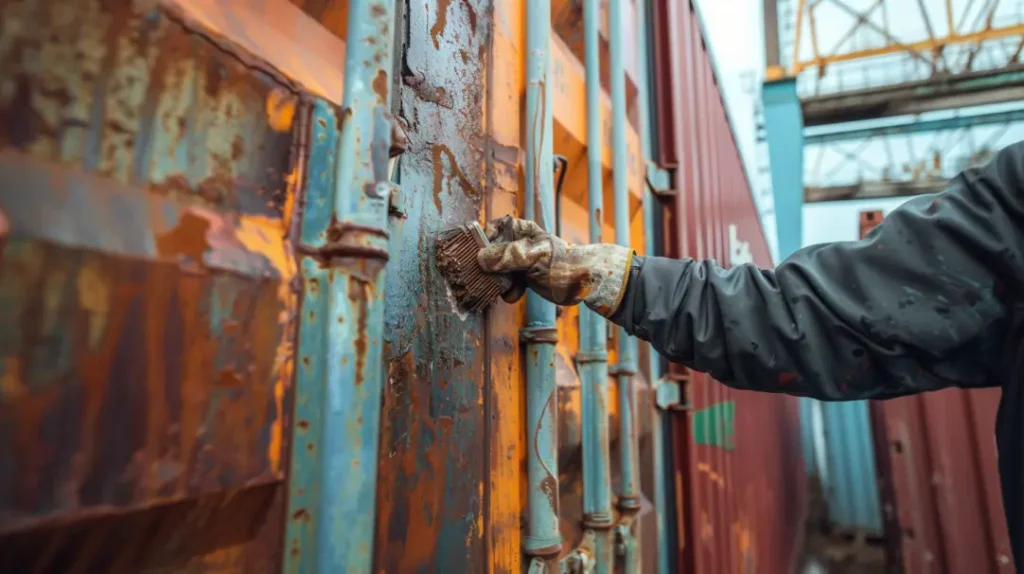
Why Shipping Containers Are Designed to “Rust”
(and how they changed the world)
What may look like ordinary rust is, in reality, an almost impenetrable shield. But the true secret of the shipping container is something even greater: it completely transformed global logistics. This is the story of the steel box that made the modern world possible.
Think about it for a moment: we see them everywhere. Stacked in ports, loaded onto massive ships, attached to freight trains. At first glance, they may seem like simple rusty metal boxes. In reality, shipping containers are one of the most brilliant inventions of the twentieth century.
They helped shape globalization, drastically reducing transport times and permanently changing the way goods, cities and economies function. But let’s start with the detail that surprises almost everyone: did you know that shipping containers are designed to rust?
The Corten Paradox: When the Problem Becomes the Solution
Normally, when we see rust on metal, we immediately think of damage. And in most cases, that is exactly what it is. Rust is a sign of deterioration: the material begins to lose protection, weaken over time and, eventually, lose resistance.
With shipping containers, however, the story is more interesting.
Modern containers are not made from ordinary iron. They are built using a high-performance material known as Corten steel, or weathering steel: a special alloy containing elements such as copper, chromium, nickel and phosphorus. When exposed to the atmosphere, this material develops a superficial oxidation layer — a protective patina.
This is not ordinary rust.
It does not flake away in the same way as common corrosion. Instead, it stabilizes and forms a protective skin that helps prevent deeper corrosion from attacking the internal structure.
Of course, this does not mean that a container is indestructible or completely immune to corrosion, especially in very aggressive environments or where water stagnates. But it does mean that it was designed to withstand extreme conditions: rain, salt air, impacts, continuous handling, thermal stress and years of ocean travel.
A shipping container is not simply a box.
It is a piece of engineering designed to survive the world.
But why was the container invented in the first place?
The Nightmare of the Ports and the Frustrated Entrepreneur
To understand when and how shipping containers were born, we need to go back in time.
Before the 1950s, goods were transported through a system known as break-bulk shipping. Imagine the chaos: hundreds of dockworkers loading and unloading wooden crates, oil barrels, coffee sacks and cotton bales by hand, one by one.
A ship could remain in port for weeks just to be loaded or unloaded. Costs were extremely high, and theft or damage to goods was incredibly common.
For workers, ports were physically demanding and dangerous environments. For entrepreneurs, they were a logistical nightmare where delays, losses and unexpected costs could easily destroy profit margins.
Everything changed thanks to the intuition of one frustrated businessman.
In the 1930s, Malcom McLean, a trucking entrepreneur, was waiting in line at a port with his truck. Watching dockworkers unload his cargo by hand, he had a simple but revolutionary idea:
Why waste time unloading the truck body?
Why not detach the entire box and load it directly onto the ship?
McLean continued to develop this concept until April 26, 1956, when the Ideal X - an old oil tanker converted for container transport - set sail carrying the first 58 containers in history.
That was the turning point.
The cost of loading goods collapsed from 5.86 dollars per ton to just 16 cents.
A simple idea had completely changed the logic of transport.
The Magic of the Global “Lego” System
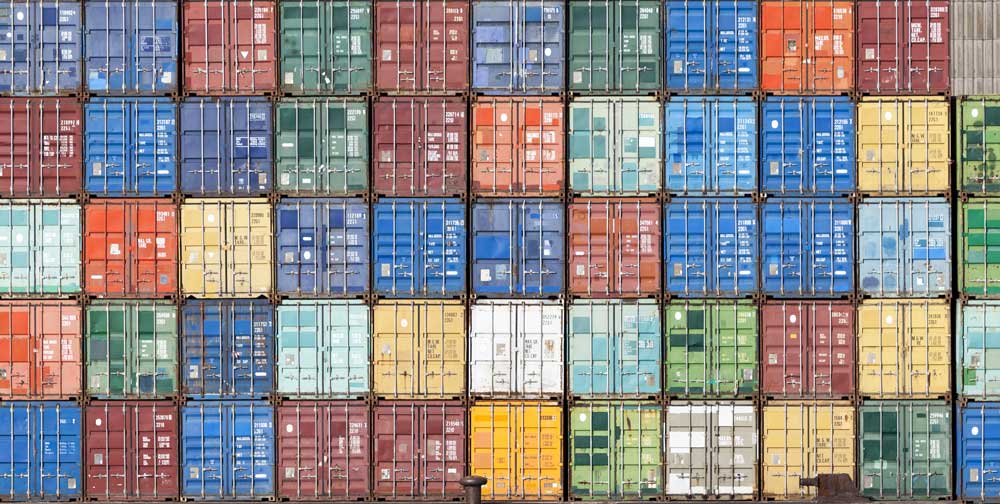
The containers used on that first historic voyage were very different from today’s standardized models. But they had already introduced the fundamental innovation that would revolutionize intermodal transport: the possibility of moving the same unit across ships, trucks and trains without opening it.
The real explosion came in 1968, when the ISO - the International Organization for Standardization - established global rules for container dimensions and components.
Standards such as ISO 668 defined the dimensions of containers, helping establish the now-iconic 20-foot and 40-foot formats. ISO 1161 defined the corner castings: the reinforced corner blocks that allow containers to be lifted, locked, stacked and transported safely.
This turned the container into a universal language.
Imagine the simplicity: a container filled in Tokyo can be unloaded in Rotterdam and placed onto a train to Milan without ever being opened.
That is the power of standardization.
According to the World Shipping Council, its member companies represent around 90% of global liner shipping capacity and move more than 4 trillion dollars’ worth of goods every year. This gives us an idea of how central the container still is to the global economy today.
So what does the container represent now?
From Logistics Object to Contemporary Symbol
The container was born for a practical reason.
Today, it remains one of the strongest symbols of international trade. But reducing it to that role alone would be limiting.
Its form, resistance and history have also turned it into a contemporary symbol of reuse, modularity and architectural transformation - what is often called cargotecture.
And this is where the philosophy of FDAG Studio comes in.
Through upcycling, we see shipping containers not as waste, but as engineering objects with a second architectural life. Instead of being discarded, they can become the structural skeleton of new spatial experiences.
By working with the strength of weathering steel, the modular logic of the container and the resilience of its shell structure, the raw industrial soul of the container can be transformed into sustainable luxury architecture.
With advanced insulation systems, NZEB-oriented technologies and large glazed openings, an object originally designed to survive the open sea can become a contemporary eco-conscious villa.
A structure that does not hide its industrial heritage, but celebrates it.
Because the shipping container is not just a box.
It is one of the objects that changed the world - and today, architecture can give it a second life.
Read more

SecondLife 08 | The Dark Side Of Ocean Voyages
SecondLife is our editorial space where we explore how architecture can give new purpose to shipping containers. From iconic projects around the world to fresh ideas on circular design, we share stories that inspire a more sustainable and elegant future.
Alessandro Giametta
Co-Founder
SecondLife 07 | Containers are designed to Rust
SecondLife is our editorial space where we explore how architecture can give new purpose to shipping containers. From iconic projects around the world to fresh ideas on circular design, we share stories that inspire a more sustainable and elegant future.
Alessandro Giametta
Co-Founder
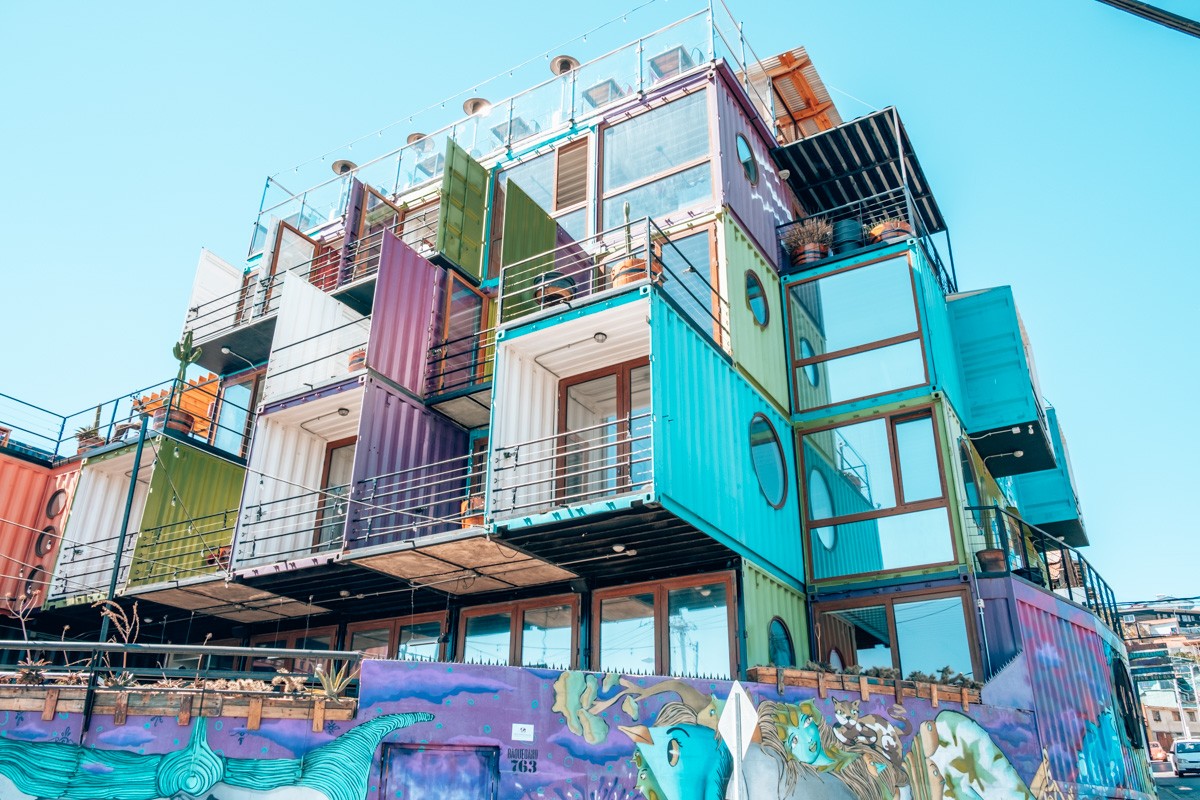
SecondLife 06 | WineBox Hotel by Grant Phelps & Camila Ulloa
SecondLife is our editorial space where we explore how architecture can give new purpose to shipping containers. From iconic projects around the world to fresh ideas on circular design, we share stories that inspire a more sustainable and elegant future.

Francesca Dipino
Co-Founder