
SecondLife is our editorial space where we explore how architecture can give new purpose to shipping containers. From iconic projects around the world to fresh ideas on circular design, we share stories that inspire a more sustainable and elegant future.

Alessandro Giametta
Co-Founder

From the Empty Container Paradox to Stories of the Abyss
They transport air for billions of dollars, sometimes get lost in the oceans, and hide chemical secrets. We reveal what happens behind the scenes of global logistics, and how FDAG Studio's architecture transforms these challenges into high-end resources.
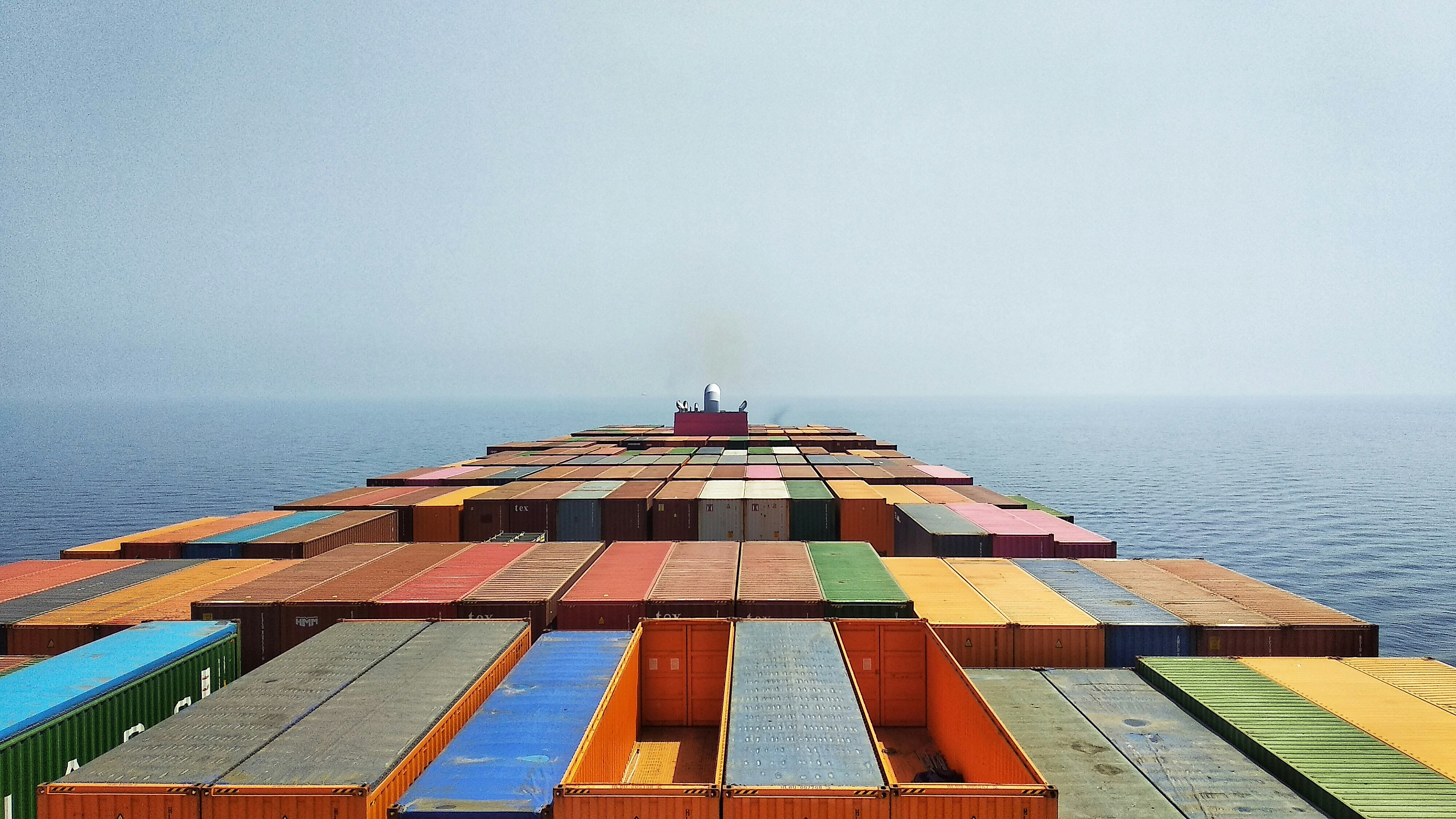
If we look at a container ship sliding calmly on the horizon, we have the impression of observing a perfect gear-a symbol of efficiency connecting factories and homes in every corner of the planet. But if we tried to look inside those huge steel boxes, we would discover a very different reality. Beneath the shiny surface of global trade lie environmental paradoxes, spectacular accidents, and chemical secrets that the shipping industry has been trying to manage for decades.

1. The Great Paradox: Colossal Ships Carrying... Air
The first major short-circuit of modern logistics arises from a simple geographical imbalance: Asian countries produce and export an immensely greater quantity of goods than they import from Europe or North America.
This systematic mismatch creates a massive logistical headache once the cargo reaches its destination. Once the containers are emptied in European or American ports, there are simply not enough local products to put back inside them for the return voyage. Leaving them idle on the docks to occupy precious space is not an option. Consequently, shipping companies are forced to reload empty containers onto ships and send them back to Asia at their own expense.
This phenomenon is technically known as Empty Container Repositioning (ECR). It is one of the most significant and costly inefficiencies of our times. In fact, nearly 20% to 40% of all container movements across the oceans consist of empty units traveling back to their origin. This continuous "transport of air" costs the shipping industry between 15 and 20 billion dollars per year and generates millions of tons of unnecessary CO2 emissions that weigh heavily on our planet.
However, this massive, constant rotation of empty steel across the oceans is not just expensive and polluting. The more containers travel, the higher the risk that something, during the most extreme routes, will go wrong.
2. When the Storm Strikes
On open ocean routes, atmospheric stability and calm waters are never guaranteed; it is precisely here that the economic paradox turns into a potential environmental disaster. When mega-container ships face the oceans, they must reckon with the brutal force of nature and the limits of physics.
According to data compiled by the World Shipping Council (WSC), between 2008 and 2022, an average of 1,566 containers per year were swallowed by the waves.
But how does a steel box weighing several tons simply slide into the sea? Often, it is not just a matter of bad weather or rogue waves. There is a more subtle human and technical factor at play. For years, some shippers declared false weights to save on transport tariffs. If a very heavy container-declared as light-is mistakenly stacked on top of lighter units, it compromises the stability of the entire stack. Under the violent rolling and pitching motions of the ship during a storm, the resulting inertial forces become unsustainable. The steel lashings and locking systems (the famous twist-locks) can snap, triggering a domino effect that sends entire columns of containers sliding directly into the water.
(Note: To prevent these dangerous imbalances, the International Maritime Organization introduced the VGM (Verified Gross Mass) requirement, mandating that every container must be weighed and certified before being loaded on board).
Once they fall into the sea, containers do not always sink immediately. If they contain light goods or are thermally insulated (like refrigerated reefer units), they can float just beneath the surface for weeks. They become "ghosts" in the water—virtually invisible, highly dangerous traps for other vessels navigating at high speeds. When water eventually penetrates and drags them to the seabed, their Corten steel shells begin to corrode slowly, releasing paint, microplastics, and sometimes hazardous chemicals into fragile deep-sea ecosystems.
3. Plastic Dragons and Traveling Ducks
Over the decades, these lost cargo containers have written some of the most extraordinary and unexpected chapters in oceanography:
The 28,000 Rubber Ducks of 1992: In the middle of the North Pacific, the container ship Ever Laurel lost three containers containing thousands of floating bath toys (yellow ducks, red beavers, and green frogs). Driven by winds and currents, these little plastic travelers crossed the Bering Strait, drifted through Arctic ice, and eventually washed up on the shores of North America and even Cornwall. For over a decade, their journey provided oceanographers with invaluable, highly accurate data to map global ocean currents.
The Lego Tide of 1997: When the ship Tokyo Express was hit by a rogue wave off the coast of England, it lost 62 containers. One of them contained nearly 5 million pieces of Lego, ironically almost all ocean-themed (dragons, octopuses, flippers). Even today, nearly thirty years later, the currents continue to wash these plastic pieces onto the beaches of Cornwall. What started as a children's toy has become a persistent symbol of plastic pollution in our seas.
4. The Invisible Legacy: Chemical Treatments Under Your Feet
When a shipping container is finally retired from active service after 10 to 15 years at sea, it presents itself as a solid, indestructible steel structure. However, it carries a hidden "chemical cargo" that is mandatory under strict international biosecurity laws but toxic to humans.
To prevent wood-boring insects, termites, or fungi from migrating between continents, the heavy 28 mm marine plywood floors are pressure-treated at the source with heavy chemical pesticides based on Arsenic, Chromium, and Copper (known as the CCA treatment). Additionally, the industrial paints used on older units to resist salt spray often contained lead.
This means that a raw, untreated used container cannot and must not be used for direct human habitation. Living inside one without professional treatment would mean breathing in toxic chemical off-gassings in an enclosed space.

5. The Ethical Answer: Luxury Upcycling by FDAG Studio
It is precisely at this intersection-between an industrial waste challenge and the need for healthy, sustainable housing-that our philosophy is born. At FDAG Studio, we do not just buy a container to paint it and put a bed inside. We completely cure, decontaminate, and regenerate the structure.
Melting down a single 40-foot container to recycle its steel consumes about 8,000 kWh of energy. Choosing Upcycling (architectural reuse) means saving that Corten steel shell, preserving 4,000 kg of raw material, and preventing the emission of approximately 8.5 tons of CO2 compared to traditional concrete and brick construction.
In our design process, we address the structural and chemical challenges of containers with rigorous, scientific protocols:
Total Decontamination: We carry out full industrial sandblasting of the steel walls to eliminate lead paint residues, and we completely remove or hermetically seal the original pesticide-treated plywood flooring, replacing it with healthy, certified bio-compatible materials.
Thermal Envelope Engineering: Steel is an excellent conductor of heat. Without state-of-the-art insulation, a container would be freezing in winter and boiling in summer. We apply aerospace-grade thermal insulation (such as vacuum-insulated panels or advanced closed-cell systems), completely eliminating thermal bridges to achieve NZEB (Nearly Zero Energy Building) standards.
Spatial Revolution: We overcome the narrow, elongated shape of the container by combining multiple modules, removing interior walls, and installing structural steel reinforcement portals. This allows us to create spectacular, light-filled open spaces with floor-to-ceiling glass walls that seamlessly connect the indoor luxury with the surrounding nature.
The shipping container was born to move goods through storms and oceans. At FDAG Studio, we believe its most beautiful journey begins today: being rescued from the sea to become the canvas for safe, ecological, and extraordinarily beautiful luxury architecture.
References / Sources
Logistics & Empty Container Repositioning (ECR): MDPI - Container Slot Allocation with Empty Container Repositioning; Drewry Shipping Consultants; Logistica News.
Containers Lost at Sea & Statistics: World Shipping Council (WSC) Reports; Shipsgo Blog - "What Happens When Containers Fall into the Sea?"; Effects of a Lost Shipping Container in the Deep Sea - National Oceanic and Atmospheric Administration (NOAA).
The 1992 Toy Spill (Friendly Floatees) & The 1997 Lego Spill: Friendly Floatees - Wikipedia; Ebbesmeyer, C. - "Flotsametrics and the Floating World"; Smithsonian Magazine.
Plywood Treatments & Decontamination (CCA): International Convention for Safe Containers (CSC); Greenpeace Research Laboratories - "Shipping and Handling of Pesticide Cargoes"; FDA (Food and Drug Administration) Wood Safety Standards.
Upcycling & Sustainable Architecture: Global Scientific Journal; L'Infrastruttura dell'Intermodalità: Analisi del Ciclo di Vita del Container Marittimo.
Image5 credits: BulentBARIS
Read more
SecondLife 08 | The Dark Side Of Ocean Voyages
SecondLife is our editorial space where we explore how architecture can give new purpose to shipping containers. From iconic projects around the world to fresh ideas on circular design, we share stories that inspire a more sustainable and elegant future.
Alessandro Giametta
Co-Founder
SecondLife 07 | Containers are designed to Rust
SecondLife is our editorial space where we explore how architecture can give new purpose to shipping containers. From iconic projects around the world to fresh ideas on circular design, we share stories that inspire a more sustainable and elegant future.
Alessandro Giametta
Co-Founder
SecondLife 06 | WineBox Hotel by Grant Phelps & Camila Ulloa
SecondLife is our editorial space where we explore how architecture can give new purpose to shipping containers. From iconic projects around the world to fresh ideas on circular design, we share stories that inspire a more sustainable and elegant future.

Francesca Dipino
Co-Founder